



Providing Answers, Support and Hope in Pennsylvania, Delaware and Southern New Jersey
Feature Story: Rosybell Maria
Meet Rosybell and learn more about her journey!
The year is 2015. You might have a favorite memory for that year or maybe you hit a major milestone in life. For me, 2015 was the year I was diagnosed with Lupus. I received my diagnosis at the age of 21, right around the time I was preparing to start a new job in Milan, Italy. After college, I had plans of becoming a U.S. Diplomat but my dreams of traveling the world were crushed in a single doctor’s visit. Having Lupus meant I could no longer pass the world health clearance required to become a Diplomat and would have to do a complete 180 with my lifestyle. I remember my mother telling me “lo que esta para ti, nadie te lo puede quitar” . I was so upset to hear her say “what is meant for you, will be” because my diagnosis meant I could no longer pursue my dreams and would instead have to face the unknown with a chronic illness.
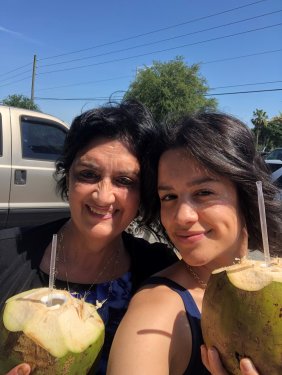
But in that moment of anger and uncertainty, I was forgetting that I've never known a life without lupus. My mom, Rosa, was diagnosed with Lupus at the age of 30, when she was pregnant with me. Not only did she face serious complications during her pregnancy, but Lupus was not well understood in the early 90s. In the Latinx/e community, she was written off as having a death sentence. I have vivid memories of translating for her at doctors appointments and spending countless nights in the hospital after her flares. The more I engaged in advocacy, informally and formally, the more I realized that knowledge about Lupus in my community was limited. In fact, women of color are 2-3x more likely to be diagnosed with lupus than other group.
The “chronic” part of a chronic illness means I will bear the burden of Lupus for the rest of my life. I will have to deal with fatigue, joint pain and the day to day uncertainty. However, chronic can also mean persistent. I choose to be persistent in advocating for myself, for my mother, and for all the people, especially women of color, who are affected by Lupus. Lupus has helped me realize that I didn’t need to be a diplomat to make a difference. I could make a difference in my hometown of Philly. Lupus presented me with many so obstacles but it also gifted me so much more. My support network has grown and I have a community beyond my family that is committed to a cause and continues to raise awareness about what it means to live with Lupus. So what I didn’t understand then, that I understand now years later, is that what was meant for me did not pass me.