
Find Support for Your Journey
Our support groups offer a safe, welcoming space to share your experiences and build a community of encouragement.



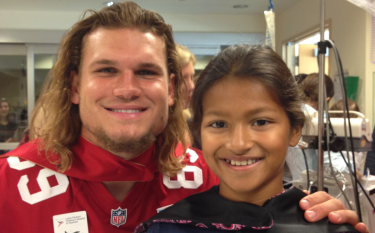
The start of a new school year often brings excitement and even some first-day butterflies. But for children and teens living with lupus, the back-to-school season can also bring a unique set of challenges – managing medications, balancing doctors appointments with classwork, explaining an invisible illness to classmates, and learning how to advocate for themselves. Gayatri Raut knows that journey firsthand.
Diagnosed with lupus in 2014 at age 11, just after starting at a new school, Gayatri remembers how quickly life changed. An avid swimmer, she suddenly had to step away from the sport that she had dedicated her childhood to.
“[Losing swimming] meant losing not just an activity I loved,” Raut said, “but also the community and identity I had built around it.”
Additionally, immunosuppressant medications meant wearing a mask to school, which was unusual before the pandemic. Frequent absences for medical appointments, medication side effects and the emotional weight of looking different from her classmates made fitting in especially difficult.
Today, however, Raut is a biologist pursuing a master’s degree with plans to earn a doctorate. She hopes to continue bridging research, patient care and peer support for those living with chronic illness.

A childhood lupus diagnosis doesn’t just affect one person. It changes life for the entire family. Parents suddenly find themselves learning about medications, special appointments, school accommodations, and an unpredictable disease. Meanwhile, children are trying to understand why their bodies feel different.
“As a child, I didn’t understand what was happening,” Raut said. “For the first few years after my diagnosis, I didn’t really grasp what lupus was; I just knew I felt sick, had to take a lot of medication, and saw doctors often.”
While it can be challenging adapting to a lupus diagnosis, families can teach their children about lupus in age-appropriate ways. As children mature, involving them in conversations about their health helps build confidence and prepares them to manage their care as adults.
“As I got older and learned more about my condition, things became a lot easier,” Raut said. “It’s important to let kids come to terms with it in their own time and encourage that independence, because it also prepares them for adulthood.”
Returning to school after a lupus diagnosis can feel overwhelming. But families don’t have to navigate it alone. Gayatri credits academic accommodations and supportive teachers with helping her find success.
“At school, I had accommodations in place, and my teachers were really great at checking in on me and making sure I was okay and could keep up with my work even when I missed class.”
Because lupus symptoms and flares can be unpredictable, flexibility with assignments, attendance, testing, and rest breaks can help students continue learning while protecting their health. Educating teachers and school staff about lupus also helps create a more supportive environment.
Our support groups offer a safe, welcoming space to share your experiences and build a community of encouragement.
“It’s important to remember that the child is the one who faces most of the day-to-day consequences of the disease,” Raut said. “Having a plan in place really matters. For younger children, that means making sure they have trusted teachers or school staff they can rely on if something goes wrong.”

One of the hardest parts of returning to school can be deciding how to explain lupus to others. Sharing information with the people who spend time with someone living with lupus can make a big impact. Explaining that lupus isn’t contagious and that children may need flexibility or support helps reduce misunderstandings and build stronger support systems.
“Keeping the explanation simple and relatable makes a big difference,” Raut said. “You don’t have to go into every detail or medical term; just sharing how it affects you daily is often enough for people to understand and be supportive.”
Families can support children with lupus by encouraging open, honest conversations about their diagnosis and feelings. When parents listen without judgment and avoid treating lupus as a hidden or shameful topic, children learn that it is okay to discuss difficult emotions and experiences.
This openness builds confidence and helps children develop the skills to advocate for themselves when communicating with others.
And as children become teenagers, managing lupus becomes more than remembering medications. It becomes learning to advocate for themselves.“It’s important for families to start letting children chime in at doctor appointments from a young age,” Raut said.
“Allowing kids to be curious about their condition is one of the best ways they can learn about it. When children feel like they’re part of the conversation, they start to take ownership of their health over time.”

As Raut transitioned from childhood to college, finding a sense of community became increasingly important. Connecting with others who shared similar interests or life experiences helped her feel supported during this new stage of life.
Being around people who understood the challenges of balancing lupus, school, and a social life made her feel less alone and reinforced the value of having a strong support system.
“Connecting with people who share the same experiences is really important,” Raut said. “While a support system of friends and family is essential, they don’t always fully understand what it’s like to live with lupus. Other people with lupus understand the emotional weight of managing a chronic illness day to day.”
For Raut, building a strong support network has been just one part of learning to live well with lupus. Over time, she has also developed a mindset of patience and resilience, recognizing that adjusting to life with a chronic illness is a gradual process rather than something that happens all at once.
“Take it day by day,” Raut said. “Some days will be harder than others, but there are also plenty of good days. Be patient with yourself and trust that over time, things will start to feel more manageable. Keep showing up, and remember that progress doesn’t always look linear.”