
Care From a Distance
Living far from a rheumatologist can make managing lupus challenging. Explore practical tips for coordinating your care, staying connected with your healthcare team, and managing lupus when your specialist isn’t nearby.



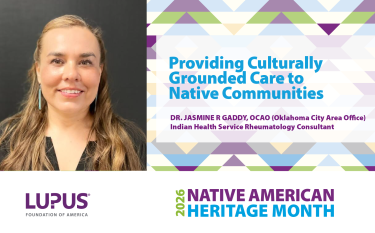
As an enrolled member of the Navajo Nation, Dr. Jasmine R. Gaddy knew as a child that she wanted to dedicate her career to serving her community through medical care. Originally from Gallup, New Mexico, she is a rheumatology consultant who works at the Indian Health Service, an agency responsible for providing health services to Native Americans and Alaska Natives.
“From an early age, I understood the challenges our people face in accessing medical care,” Dr. Gaddy said. “My experiences as a Navajo community member, patient, and now physician have shaped the way I approach medicine.”
The connections to her home community guide her work and her commitment to improving health outcomes for Indigenous populations, which includes the importance of culturally grounded care, trust-building, and advocacy for her patients.
To understand how to approach rheumatic diseases for Native communities, you have to consider each patient’s lived experiences, cultural values, and family responsibilities.
“In our communities,” Dr. Gaddy said, “disease management requires understanding how illness affects a person’s role within their family, their participation in cultural practices, and their ability to fulfill responsibilities that are central to their identity.”
It is also important to remember that healing is not only physical, but also emotional, cultural, and relational.
“Meaningful care involves supporting patients in returning to the parts of life that matter most to them—whether that is participating in a local powwow, caring for children and grandchildren, or maintaining connection to community and tradition,” Dr. Gaddy said.
Native patients with lupus face many challenges when it comes to diagnosis, treatment, and ongoing disease management, with the most persistent barrier being access to care.
“Many of our patients encounter socioeconomic and structural obstacles,” Dr. Gaddy said, “such as limited financial resources, unreliable or unavailable transportation, and the realities of living in rural or remote communities where specialty services are scarce.”
These barriers can lead to patients first coming to care at a point when the disease is already advanced.
“Chronic stress, historical trauma, and disparities in healthcare resources may also influence disease severity and outcomes,” Dr. Gaddy said. “These patterns remind me of the importance of early recognition, proactive screening, and culturally informed care that anticipates these risks.”
Yet another factor that limits care options and quality of care for Native communities is geographic location, specifically how it restricts access to specialists, transportation, or other healthcare options.
Lupus often requires timely input from an entire healthcare team, including specialists like nephrologists, cardiologists, and dermatologists. However, those services are not always readily available in rural areas.
“Delays in specialist evaluation, difficulty completing recommended testing, and the burden of travel all contribute to disparities in lupus diagnosis, monitoring, and treatment,” Dr. Gaddy said. “Strengthening local specialty access and expanding telehealth remain essential strategies for improving care for our patients.”
When access is limited, telehealth plays an essential role in bringing care to people who otherwise would not be able to regularly interact with their healthcare team. Additionally, specialists will often travel themselves to satellite clinics. Still, even though these efforts have improved access, they do not fully eliminate the barriers created by distance, transportation limitations, and rural lack of infrastructure.
Living far from a rheumatologist can make managing lupus challenging. Explore practical tips for coordinating your care, staying connected with your healthcare team, and managing lupus when your specialist isn’t nearby.
Through her work, Dr. Gaddy has seen that the challenges faced by Native communities do not reflect a lack of interest or commitment to their health. In fact, many of her patients deeply understand the seriousness of their disease and want to participate fully in their care. However, the barriers surrounding them can make receiving treatment and consistent follow-up extremely difficult.
“It is important not to equate these access limitations with disengagement, but rather to recognize them as systemic obstacles that require understanding, flexibility, and advocacy from healthcare providers,” Dr. Gaddy said.
Managing lupus often involves the entire family, with relatives helping with medication management, arranging transportation to medical appointments, and providing assistance with everyday tasks and responsibilities.
Through traditional practices and guidance from respected community members, patients may find emotional strength and preserve a strong sense of identity and belonging, even during challenging periods when their disease is more active.
“These cultural and familial networks often serve as the foundation for resilience,” Dr. Gaddy said. “When we honor the role of family and community, we create treatment plans that strengthen trust and improve outcomes by acknowledging the collective nature of healing in many Tribal communities.”
It is essential to have conversations about using traditional healing practices alongside conventional lupus treatments. Dr. Gaddy said she welcomes conversations about traditional healing practices and views them as an important part of many patients’ cultural identity and wellness. In some cases, traditional practices can complement conventional lupus treatment when integrated thoughtfully.
“I encourage patients to be forthcoming about any traditional medicines, herbal remedies, or ceremonial practices they are using,” Dr. Gaddy said. “This allows me to ensure their safety and to identify potential concerns.”
According to Dr. Gaddy, the goal is to support patients in honoring their cultural practices while also providing evidence‑based medical care. Creating space for transparent and nonjudgmental dialogue allows patients and healthcare teams to develop treatment plans that are both culturally meaningful and medically safe.
Building trust is one of the most important elements within the landscape of healthcare. Trust can help doctors and other healthcare professionals practice culturally responsive care when working with Native patients. This requires consistency, presence, and genuine relationship‑building.
“One of the most important factors is being a constant in patients’ lives,” Dr. Gaddy said. “High provider turnover is a persistent challenge in many Tribal healthcare settings, and it can make it difficult for patients to feel secure, understood, or willing to share openly.”
“Another essential element is taking the time to meet and engage with the patient’s family,” Dr. Gaddy added. “When providers connect with family members and ensure everyone understands the care plan, it strengthens communication and shows respect for the patient’s cultural context.”
By establishing trust through consistent care and fostering connections that extend beyond the clinical setting, healthcare professionals can help patients feel understood and valued, encouraging them to become more active partners in their disease management.
Have questions about lupus or need help finding resources? Our health education specialists provide free, nonmedical, personalized information and guidance to help you navigate life with lupus.
Misconceptions about lupus can create fear and uncertainty for people, particularly when first diagnosed. By addressing misconceptions with openness and education, healthcare teams can help patients feel more hopeful, informed, and engaged in their care. According to Dr. Gaddy, there are several misconceptions when it comes to a lupus diagnosis:
Improving lupus care for Native American and Alaska Native communities starts with recognizing and addressing the systemic, geographic, and cultural obstacles that influence patients’ access to care.
Challenges such as limited availability of specialists, extensive travel distances, socioeconomic hardships, and delays in diagnosis are often closely connected, making it essential to address these barriers collectively.
“Health equity for Native patients requires acknowledging the structural disparities that contribute to worse outcomes and actively designing solutions that reduce those gaps,” Dr. Gaddy said. “Bringing these efforts together would move us toward a system where Native patients not only access care more easily, but also feel understood, supported, and empowered in managing their lupus.”

From support groups to expert resources and personalized guidance from our Health Educators, the Lupus Foundation of America has everything you need, all in one place.